The Claim Your Liability Policy Won't Pay
Picture a flawless flight. The aircraft launched, flew its mission, and landed without a scratch. No one was hurt, nothing was damaged, and your hull and liability policies never came close to being triggered. Then, weeks later, a client calls. The topographic survey you delivered was off by enough to throw off their site grading. The orthomosaic guided a costly decision that turned out to be wrong. The inspection you signed off on missed a defect that later failed.
There is no bodily injury here and no property damage from the flight — just a faulty deliverable and a client facing real financial loss. General liability does not respond to a pure economic loss caused by your professional work. The coverage built for exactly this situation is professional liability, also known as errors and omissions, or E&O.
For drone businesses that sell data — maps, models, measurements, inspection findings, and prescriptions — E&O is not a luxury coverage. It is the coverage that matches the actual product you sell.
What Professional Liability / E&O Covers
E&O responds to claims that your professional services were negligent, inaccurate, incomplete, or failed to meet the standard a client reasonably expected, and that the failure caused them a financial loss. It typically covers:
- Defense costs — often the largest expense, even when a claim ultimately has no merit.
- Settlements and judgments for the client's economic damages.
- Claims of errors, omissions, and negligence in your work product, not just outright mistakes.
The distinction from general liability is fundamental. GL is about harm to people and physical property arising from your operations. E&O is about the quality and accuracy of your work. A drone business needs both because it faces both kinds of risk.
The Real Exposures for Drone Data Operators
Different services create different E&O exposures. Here's where the risk concentrates by discipline.
Mapping and Surveying
Survey and mapping deliverables get baked into expensive downstream decisions — earthwork volumes, site plans, property boundaries, and construction layout. An error in ground control placement, a miscalibrated sensor, a processing mistake, or a misaligned coordinate system can produce a deliverable that looks correct but is wrong. When a client builds on that data, the cost of the error can dwarf your fee. Volumetric calculations for stockpiles and pits are a classic flashpoint, because the dollar value attached to a few percentage points of error can be enormous.
Inspection Services
Inspection work carries a uniquely sharp E&O edge: the missed defect. If you inspect a roof, tower, solar array, bridge, or industrial structure and your report does not flag a problem that later causes damage or failure, the client may allege you should have caught it. The aircraft and sensor performed perfectly; the claim is about the conclusion you delivered. Thermal and visual inspection findings that inform maintenance and safety decisions are exactly the kind of work that draws E&O claims.
Precision Agriculture
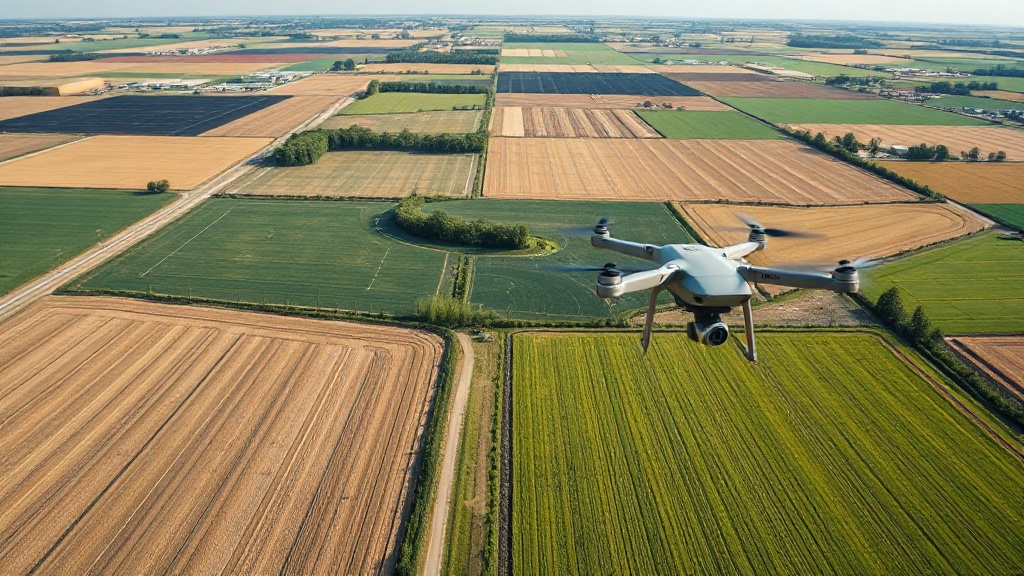
In ag, your data drives input decisions across large acreage. A flawed prescription map, a misread of crop-health imagery, or a sensor calibration issue can lead to misapplication of fertilizer, water, or treatment — and a grower's loss scales with the size of the operation. The flight was fine; the recommendation was the problem.
Real Estate and Media
Even photography and media work can generate E&O exposure when deliverables are tied to a transaction or a contractual deliverable — missed deadlines, files that don't meet promised specifications, or imagery that misrepresents a property.
Why GL Carriers Push This Back to E&O
General liability policies contain professional services exclusions specifically because work-product risk is a different animal. It depends on the standard of care for your profession, the accuracy of technical outputs, and the financial consequences of being wrong — none of which a GL underwriter prices for. When a data error claim hits a GL-only operator, the typical outcome is a denial and an out-of-pocket defense. E&O exists to fill precisely that hole.
Claims-Made Coverage and Why It Matters
Most professional liability is written on a claims-made basis, which behaves differently from the occurrence-based liability you may be used to. A claims-made policy responds to claims made and reported during the policy period, regardless of when the work was performed — provided the work happened after your retroactive date.
Two practical implications follow. First, keep your retroactive date intact when you renew or switch carriers, so past work stays covered. Second, when you eventually wind down or change coverage, consider extended reporting period (tail) coverage, which lets you report claims that surface after the policy ends for work done while it was active. Because data errors can take months or years to reveal themselves, that tail can be the difference between a covered claim and an uninsured one.
Strengthening Your Position Before a Claim
Insurance pays the claim, but good practice prevents many of them. Underwriters — and your own defense — benefit when you can show:
- Documented procedures for ground control, calibration, processing, and quality checks.
- Clear scopes of work that define deliverables, accuracy expectations, and limitations in writing.
- Retained data and logs that demonstrate what you delivered and how.
- Honest limitation language so clients understand what your data does and does not certify.
These habits reduce both the frequency of claims and the cost of defending them.
Match Your Coverage to What You Sell
If your business produces data that clients rely on to make expensive decisions, professional liability belongs in your program alongside general liability and your equipment coverages. The more your revenue depends on the accuracy of a deliverable, the more important E&O becomes.
Not sure whether your current policy includes professional liability — or whether your retroactive date and limits actually fit the work you do? Request a quote or call an agent. Our team works with mapping, survey, inspection, and ag-focused UAS operators, and we'll help you align your coverage with the real product you sell.