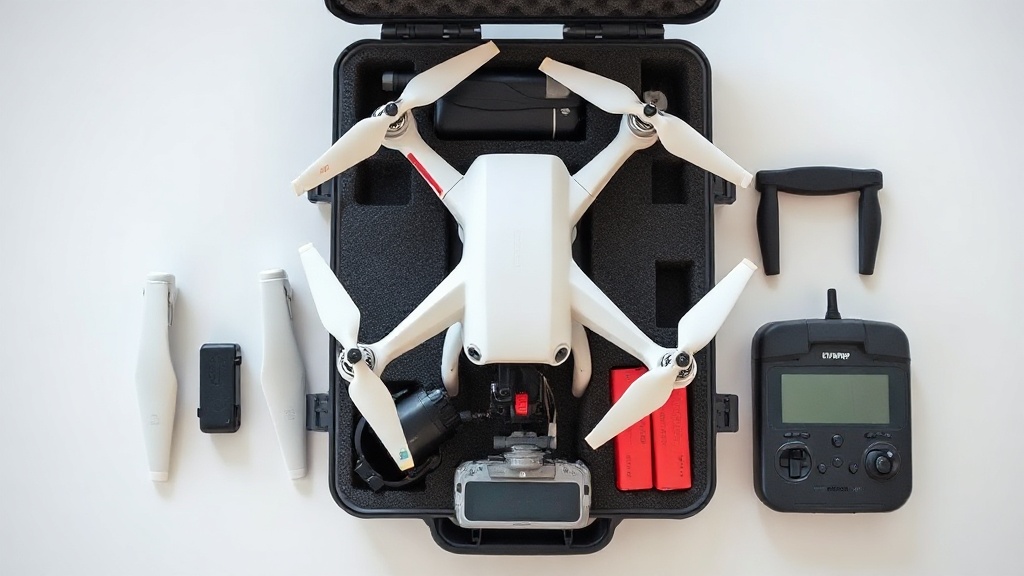
Protecting the Hardware That Earns Your Revenue
Liability coverage gets most of the attention in insurance conversations, but for a working drone operation, the coverage you are statistically most likely to use is the one that pays to repair or replace your equipment. Aircraft crash. Sensors get dropped. Gear gets stolen out of a vehicle at a job site. These are everyday events in a commercial UAS business, and the policies that respond to them are hull and payload coverage.
This article breaks down how each works, what it covers, where the common gaps are, and how to value your fleet correctly so a claim actually makes you whole.
What Hull Coverage Is
Hull coverage is physical-damage protection for the aircraft itself — the body, motors, electronic speed controllers, flight controller, and integrated systems. It is the drone equivalent of collision and comprehensive coverage on a vehicle. When your aircraft is damaged or lost, hull responds up to the insured value you've scheduled for that aircraft.
Covered events typically include:
- Crashes and hard landings caused by pilot error, mechanical failure, or environmental conditions.
- Flyaways — loss of link or GPS that sends the aircraft off course and out of recovery range.
- In-transit damage while the aircraft is being moved between sites.
- Theft and vandalism of the aircraft body.
- Water and weather damage within policy terms.
Aircraft are scheduled individually by make, model, serial number, and value. That scheduling matters: it is how the carrier knows what to pay and how you keep premium aligned with the actual fleet you fly. Most policies allow mid-term changes so you can add a new aircraft the week you buy it and remove one when you retire it.
How Aircraft Are Valued
Hull claims are paid based on the value you declare, so getting that value right is the most important decision you make. Two approaches are common: agreed value, where you and the carrier set the insured amount up front and that figure is paid on a total loss, and actual cash value, where depreciation is applied at claim time. Agreed value removes the argument about depreciation but usually costs a bit more in premium. For expensive aircraft that hold value, agreed value is often worth it. Whichever you choose, schedule the aircraft at what it genuinely costs to replace with like equipment — under-scheduling to save premium simply moves the loss back onto your business.
What Payload Coverage Is
Here is the reality of modern UAS work: the payload is frequently worth more than the aircraft carrying it. A cinema-grade camera, a survey-grade LiDAR unit, a multispectral agricultural sensor, or a radiometric thermal core can each represent a five-figure investment. Standard hull coverage does not automatically cover these — they are scheduled separately under payload coverage.
Payload coverage protects items such as:
- Cameras — from compact mapping cameras to large-format cinema bodies.
- Sensors — LiDAR, thermal/IR, multispectral, hyperspectral, and methane/gas detection units.
- Gimbals and stabilization systems that mount the payload.
- Specialized attachments — spotlights, speakers, spray systems, and delivery mechanisms.
Because payloads move between aircraft and are often the components that fail or get damaged in a rough landing, scheduling them properly is essential. An operator who insures the drone but forgets the $20,000 sensor bolted to it has insured the cheap part and exposed the expensive one.
Ground Equipment Coverage
Your operation runs on far more than the flying hardware. Ground equipment coverage protects the supporting kit that makes commercial flights possible:
- Ground control stations, controllers, and tablets.
- Batteries and charging equipment — a significant and often-overlooked cost across a fleet.
- Monitors, FPV gear, and antennas.
- GNSS base and rover units used for survey-grade positioning.
- Cases, generators, and field power.
Much of this equipment lives in a vehicle and travels to every job. That is exactly why off-premises and in-transit coverage matters — the highest-risk moments for ground gear are loading, unloading, and storage at unfamiliar sites.
Where the Common Gaps Hide
Several recurring gaps catch operators off guard:
- Transit and shipping. Equipment damaged while shipped for repair or sent to a remote job may fall outside coverage unless transit is specifically addressed.
- Batteries. Some policies treat batteries as consumables and limit or exclude them. If batteries represent a large share of your investment, confirm how they are handled.
- Rented or borrowed gear. Using a rented sensor for a one-off job? Make sure your policy extends to equipment you don't own but are responsible for.
- Mismatched values. As you upgrade equipment, schedules drift out of date. A policy reflecting last year's gear won't cover this year's purchases.
Deductibles and How They Apply
Hull and payload coverage carry deductibles, and they may differ from your liability deductible. Some policies apply the deductible per aircraft, others per occurrence. Understanding this matters when a single incident damages both the aircraft and the payload — you want to know whether you face one deductible or two before the claim happens, not after.
Keep Your Schedule Current
The single most effective thing you can do to protect yourself is keep your equipment schedule accurate. Review it whenever you buy, sell, or upgrade hardware, and at every renewal. A current schedule is the difference between a smooth claim and an argument over what was actually insured.
If you've added aircraft or expensive sensors and aren't sure your current policy reflects them, a quick equipment review is worthwhile. Our team works with commercial UAS operators every day — request a quote or call an agent, and we'll make sure your hardware is scheduled at values that actually replace what you fly.